Networked Counterculture
Is it possible to exist in the network on your own terms?

Networked Counterculture is a 30-page briefing in which we explore how the parameters of cultural production can be altered by using and abusing the logic of platforms that mediate them.
With many artists and creatives feeling like their ability to connect with their audience is decided by the algorithms of digital platforms, it begs the question: can you break the mold and still find success online?
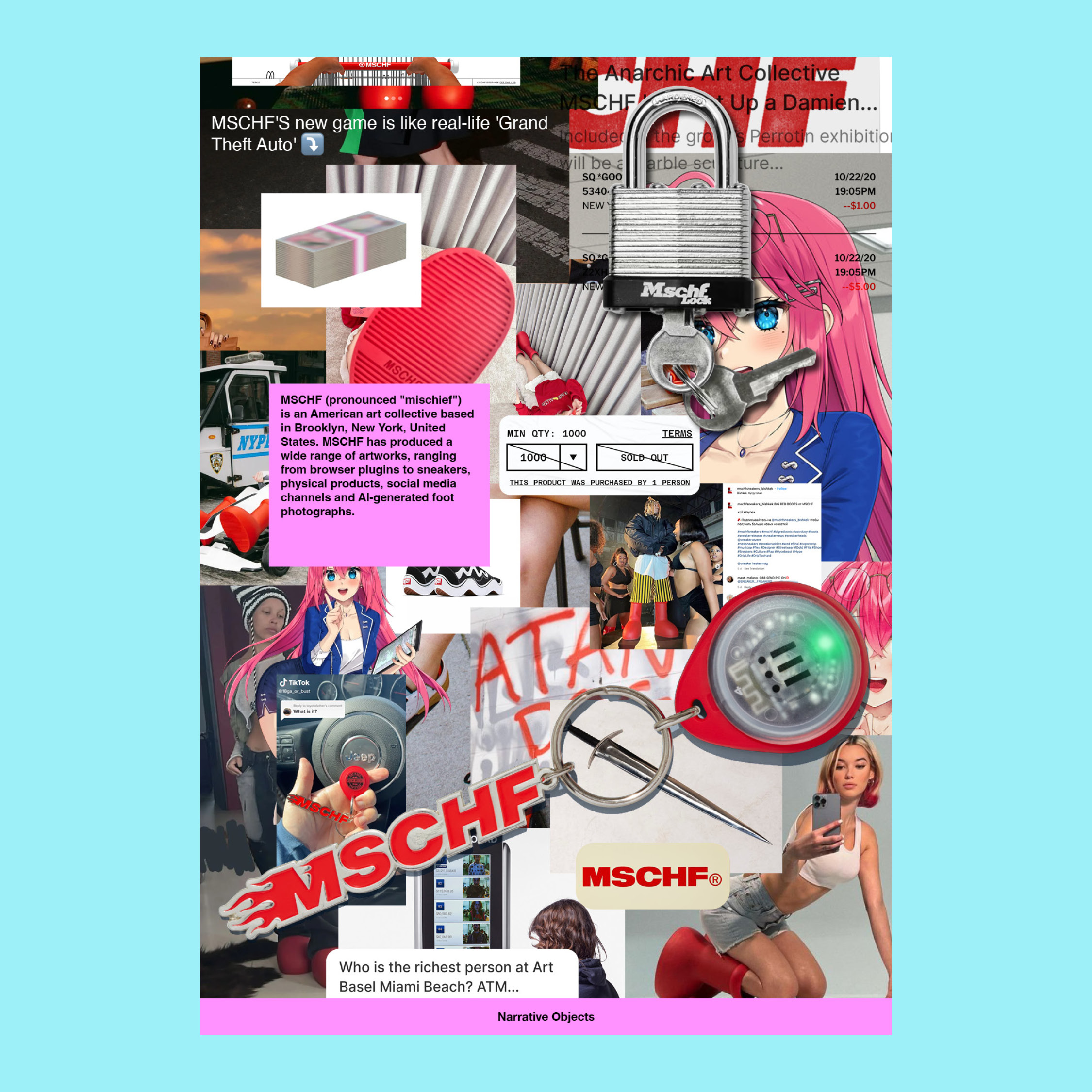
When you see MSCHF’s Big Red Boots you wouldn’t immediately think of counterculture. One of their latest drops, $320 gigantic red rubber boots inspired by 1960s comic character Astro Boy, seems to have no political or cultural agenda. Its sole purpose, it appears, is virally spreading through the network via countless influencer accounts. And yet there’s something about a MSCHF object that cuts through the noise in a way that feels different to your average engineered viral campaign. The Brooklyn art collective describes their own works as trojan horses: infiltrating a culture by mimicking its aesthetics, practices and norms. Once inside a network, they unleash their narrative potential, reeling us, the good people of the internet, to become participants in the spectacle.
Created in collaboration with WeTransfer, Networked Counterculture explores how projects like MSCHF, Corteiz and SAULT are subverting the logic of digital platforms, playing the algorithm at its own game and, most importantly, winning.
Networked Counterculture is a 30-page briefing in which we explore how the parameters of cultural production can be altered by using and abusing the logic of platforms that mediate them.
With many artists and creatives feeling like their ability to connect with their audience is decided by the algorithms of digital platforms, it begs the question: can you break the mold and still find success online?
When you see MSCHF’s Big Red Boots you wouldn’t immediately think of counterculture. One of their latest drops, $320 gigantic red rubber boots inspired by 1960s comic character Astro Boy, seems to have no political or cultural agenda. Its sole purpose, it appears, is virally spreading through the network via countless influencer accounts. And yet there’s something about a MSCHF object that cuts through the noise in a way that feels different to your average engineered viral campaign. The Brooklyn art collective describes their own works as trojan horses: infiltrating a culture by mimicking its aesthetics, practices and norms. Once inside a network, they unleash their narrative potential, reeling us, the good people of the internet, to become participants in the spectacle.
Created in collaboration with WeTransfer, Networked Counterculture explores how projects like MSCHF, Corteiz and SAULT are subverting the logic of digital platforms, playing the algorithm at its own game and, most importantly, winning.
From WePresent:
On February 20th, five days before the release of her third album, the American singer-songwriter Vérité posts a note on her Instagram titled "How do I get your attention?" In it, she describes how it feels to be an artist in the creator economy: the constant pressure to churn out bite-sized and digestible moments to get enough views, likes and comments in the desperate hope of connecting with your fans on a deeper, more meaningful level.
Vérité isn't alone in her uneasy feelings about the platforms that mediate—and effectively own—the relationship between her and her fans. Many artists find themselves torn between pleasing algorithms and staying true to their work. Platforms that once promised to remove the middlemen and create more direct, authentic connections between artists and their audiences are now gatekeepers themselves.
We know we’re trapped. But strangely we’re also in love with our captors. As long as we stream, like, binge, lol and troll online, there’s a platform that feeds on our attention, algorithmically dissecting our habits to determine the type of content created on the other side of this infinite loop. If you don’t post, someone else will take your place in our global social arena where few make it to the top whilst the rest burn out. This is how the attention economy works. If you’re not visible online, you don’t exist. We keep on posting so we're not forgotten.
With our research into networked counterculture we sought to understand whether things could be different. Is it possible to exist in the network without compromising your artistic integrity? Is counterculture possible inside the system that turns us into perpetual content creators?
With our research into networked counterculture we sought to understand whether things could be different. Is it possible to exist in the network without compromising your artistic integrity? Is counterculture possible inside the system that turns us into perpetual content creators?
Released by WeTransfer on May 24, 2023
Created and produced by co—matter
Free to download as a PDF
Idea & text: Severin Matusek
Researchers: Theresa Reimann-Dubbers, Alice Sweitzer
Creative Director: Paloma Moniz
hello@co-matter.com
Zossener Str. 41
10961 Berlin
Management Board: Severin Matusek
Court of Registration: Amtsgericht Charlottenburg HRB 195395 B
VAT ID: DE317741247
Last updated: September 1 2026 ■ 09:57am